- Curveball Chronicles
- Posts
- 2 Ways to Build Their Resilience Through Failure - & - Ways to Disguise Your Pitch Calling
2 Ways to Build Their Resilience Through Failure - & - Ways to Disguise Your Pitch Calling

Cindy Bristow
March 16, 2026

Total Reading Time: 4 minutes
Happy Monday! Conference play changes things drastically and really challenges our pitch calling. So let’s dive into how to help view failure and struggle in a new light as well as and how to disguise our pitch calling.
So let’s Go!
Table of Contents
Ways to Disguising Your Pitch Calling
Conference play brings completely different challenges than the 5-game tournaments did. Now we’re playing 3 games against the same teams, facing the same hitters, with the same pitchers and using the same pitches.
It’s a wonder we can win any games at all. It’s also why the third game of a series is usually the craziest of the three.
As pitch-callers it’s a HUGE challenge to not only make our pitchers look different each game, but to make them look different each inning and each at-bat. But, it’s vital to our pitcher’s success that we do so our best to do so.
This doesn’t mean, in an effort to confuse the hitters we start calling pitches that our pitchers can’t throw. That wouldn’t be smart. Instead, we need to mix-in some of our pitcher’s lower level pitches on occasion and then reorder her go-to pitches so our opponents can’t predict any type of pattern.
Let’s take a look at some things that might help you.
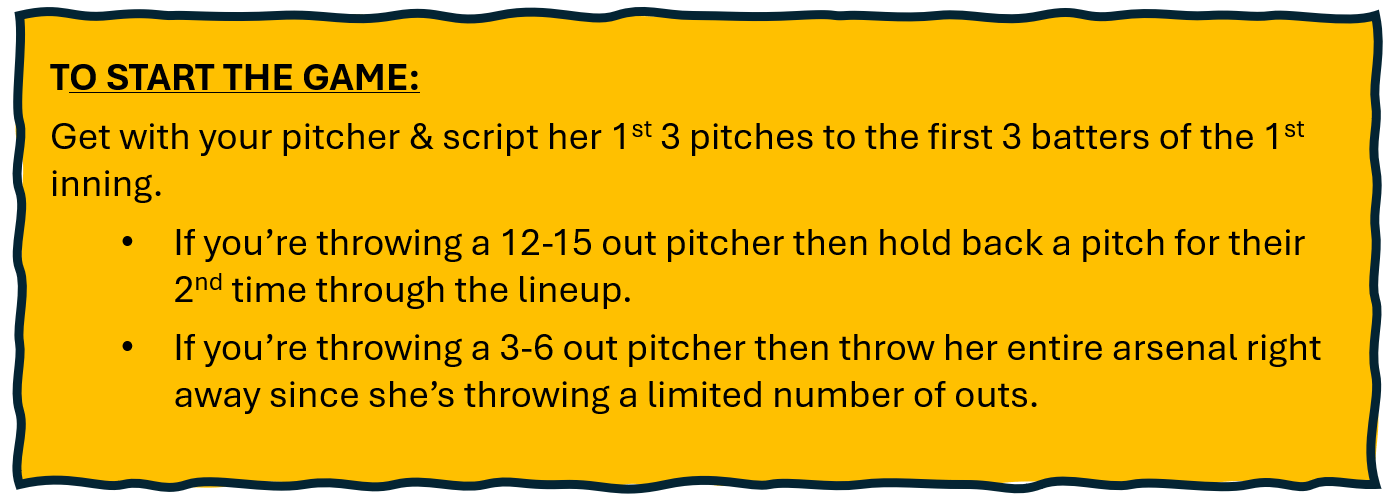
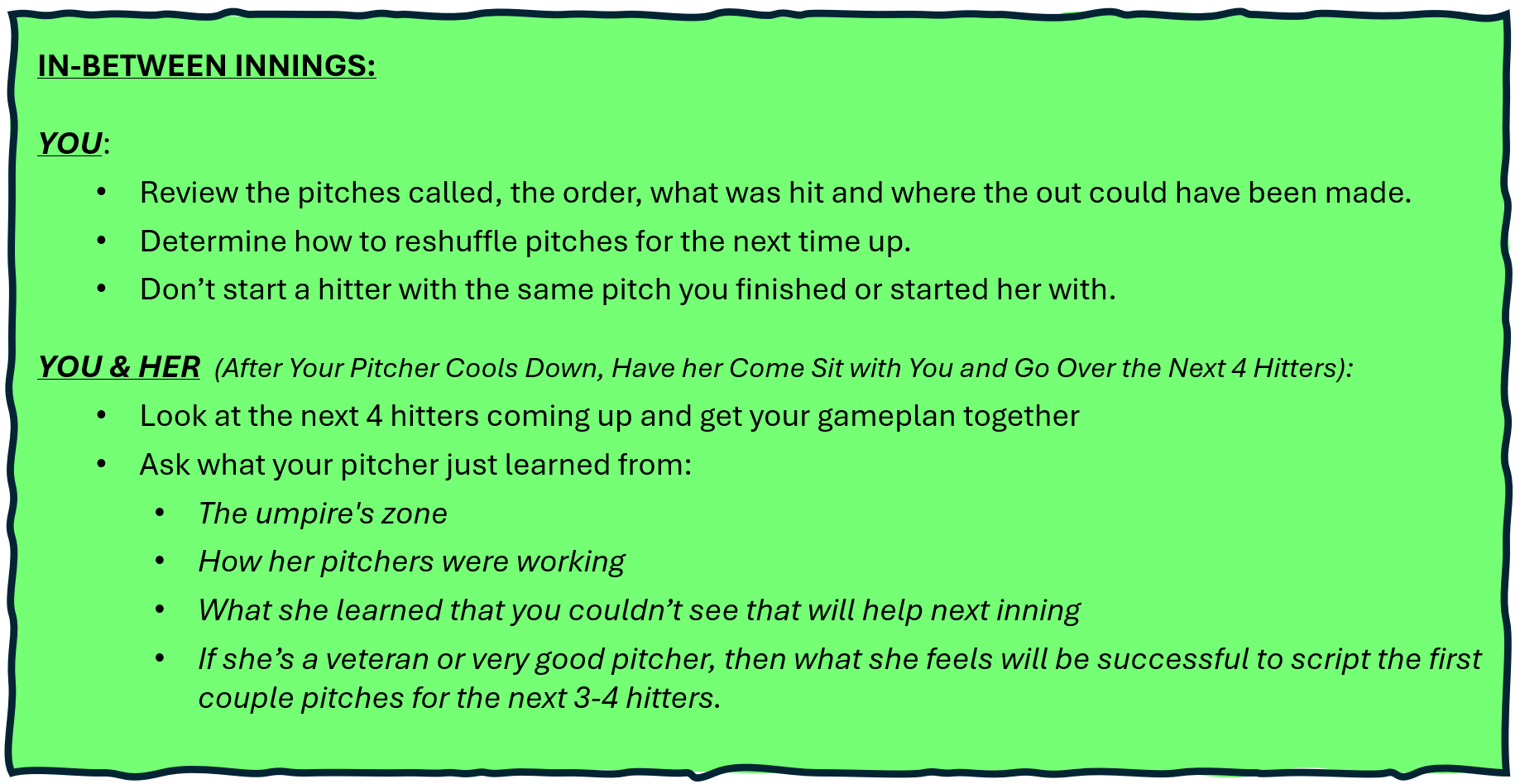
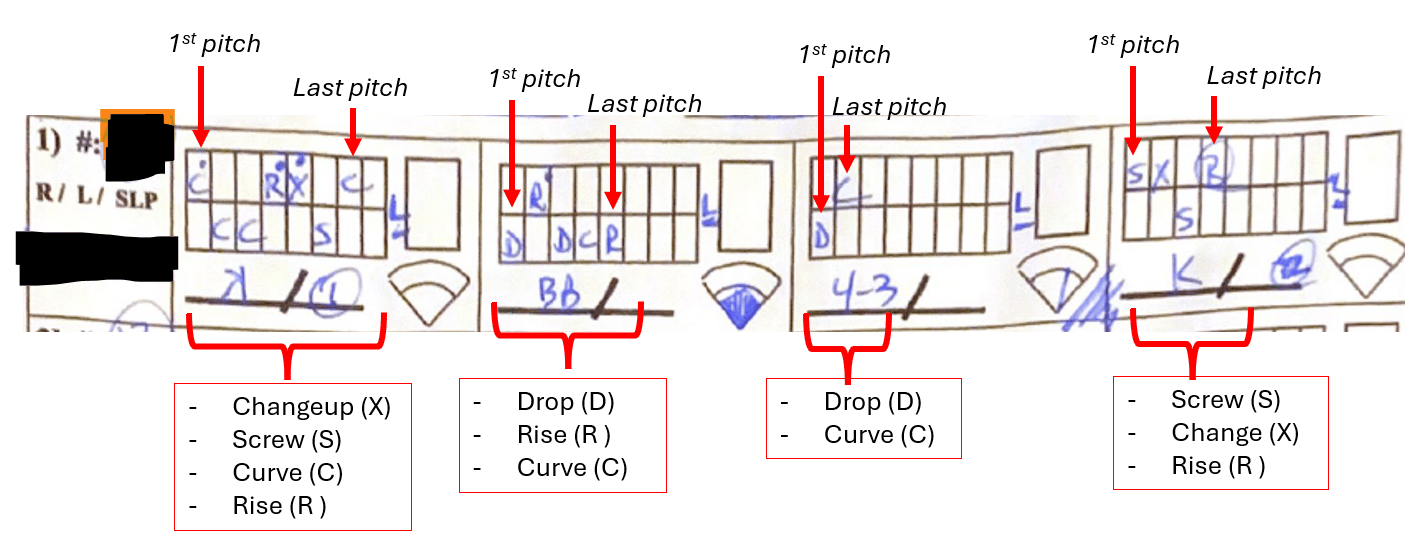
When you take these principles and look at them in real life, they look like the chart line below - where Strikes are on the Top Row and Balls are on the Bottom Row. There’s a mix of the pitches thrown each inning - with the changeup, dropball and the screwball only thrown in 2 of the 4 at-bats, but not the same 2 at-bats. It’s a mix that keeps the batter guessing - which is the whole point.

2 Ways to Building Resilience Through Failure
If failure builds resilience then some of us are getting pretty resilience right about now. Sadly.
Grand Canyon remains our only D1 undefeated team, and the rest of us have faced various shares of resilience training. There’s always two ways to look at things, and looking at failure as building resilience is vital to growth.
As we help our pitchers deal with their individual and collective struggles and failures, let’s take a dive into 2 ways to help learn from failure…
THE GIFT OF FAILURE (Book by Jessica Lahey)
The Pattern:
We’ve confused protecting kids from failure with protecting kids from harm.
They're not the same thing.
Failure isn't harm - it’s information and feedback.When we remove obstacles, we're not building confidence. (think about how we coach our pitchers in bullpens…)
→ We're building dependence.
When we solve every problem, we're not showing love.
→ We're showing distrust.
The pitchers learn:
"I need someone to rescue me."
"I'm not capable of handling hard things."
"Discomfort means I'm doing something wrongThe Alternative:
Let them make mistakes and then ask questions:
"What happened?"
"What did you learn?"
"What will you do differently next time?"
Questions. Not lectures or rescues.
LAHEY'S FRAMEWORK:
Failure teaches three things success never can:Problem-solving - When things go wrong, you have to figure out what to do next.
Resilience - You learn that falling down doesn't mean staying down.
Autonomy - You learn that you're capable of handling hard things on your own.
Justin Su’a had a post on X where he talked about the idea of Antifragility:


Thanks for reading this week’s Curveball Chronicles. I hope you gained some insight, some encouragement, some knowledge or some grace.
Go make this a Great week!!

Missed some previous issues? Don’t worry, I’ve got them all on my website: https://pitchingcoachcentral.com/curveball-newsletter/
Reply